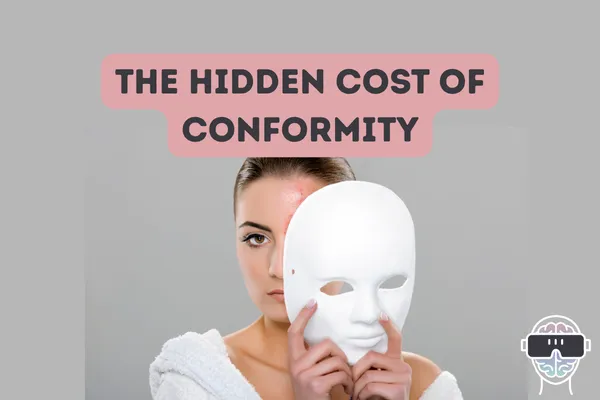
The Hidden Cost of Conformity: How Masking Impacts Workplace Innovation
In my Inclusive Crew workshops, I see the same pattern again and again.
Neurodivergent people are often the ones spotting risks early, fixing messy systems, and coming up with ideas nobody else even thought to try. They are the “why didn’t we do this sooner” brains.
And yet, loads of them still feel like they have to hide who they are at work just to get through the day without being judged.
That hiding has a name.
What masking is
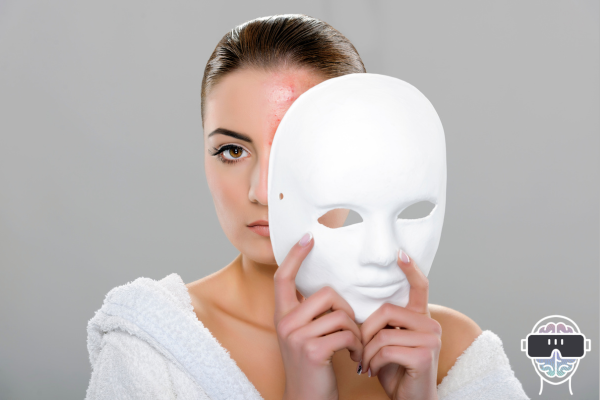
Masking, sometimes called camouflaging, is when a neurodivergent person tries to cover up natural traits to fit workplace norms.
That can look like:
Copying “normal” social behaviour even when it feels fake or draining
Stopping stimming or self-soothing habits
Forcing eye contact even though it’s uncomfortable
Keeping special interests and strengths quiet so they don’t look “too intense”
Editing their tone, face, posture, and personality all day like they’re in a constant audition
Masking can help someone blend in. It can also slowly wreck them.
The cost of masking is brutal
When you spend your working day acting, your brain is doing two jobs. The actual job. And the performance of looking “fine”.
Over time that can lead to:
Stress and anxiety that never really switches off
Burnout and constant fatigue
Lower confidence and feeling like you’re “too much” or “not enough”
Less trust in managers because it feels unsafe to be real
People leaving good jobs purely because they cannot keep up the act
Someone once described it to me as “wearing a suit of armour that gets heavier every day”. That’s exactly it. It might protect you from judgement. It also stops you breathing.
What businesses lose when people mask
Masking doesn’t just hurt the person. It also costs the business.
Because when someone is busy managing how they’re seen, they are not giving you their best thinking.
When people feel safe enough to be themselves, you get:
More ideas shared out loud, not kept locked in someone’s head
Better problem solving because different thinking styles actually show up
Stronger teamwork because people stop guessing and start being direct
Better products and services because people who notice details are allowed to notice details
I’ve seen teams change quickly once they realise neuroinclusion isn’t about being “nice”. It’s about removing the crap that blocks good work.
What actually helps. No fluffy posters required
Here are changes that reduce masking and make work easier for more brains:
Train people properly
Not a one hour slideshow and a badge. Real learning that shows what masking looks like, what sensory overload looks like, and how managers can respond without making it weird.Make communication clear and calm
Say what you mean. Write things down. Give agendas. Confirm actions. Stop relying on “we implied it” as a process.Give options for how people work
Quiet spaces. Remote or hybrid where possible. Headphones allowed. Cameras optional when it doesn’t matter. Predictable routines.Normalise adjustments
Not as a special request. As a standard menu. Like choosing laptop size. No drama.Stop judging competence by confidence
The best person for the job is not always the smoothest talker in meetings.
Where Inclusive Crew comes in
Our workshops don’t just explain neurodiversity. They help your teams feel it and understand it, so behaviour changes after the session, not just the words on a policy.
We focus on:
Reducing the everyday stress that causes masking
Giving managers tools they can use immediately
Helping teams communicate better, with less guesswork
Building workplaces where neurodivergent staff can do more than “cope”
Final words from me
If your workplace only works for people who can act “normal” all day, it’s not a great workplace. It’s just one that rewards masking.
When people don’t have to hide, you get more honesty, more ideas, and better work. Plus you stop burning out your best brains.
If you want to build a workplace where masking isn’t needed, Inclusive Crew can help you get there.
#DifferentNotLess #NeurodiversityAtWork #Neuroinclusion #InclusiveWorkplaces #PsychologicalSafety #ReasonableAdjustments #InclusiveCrew
You can buy my book 'Behind the Mask' from Amazon HERE and learn more about masking and mirroring